
5 Key Reasons Ever-Roc Outlasts Granite
In this page header section, you can provide details about the purpose of the page. This helps users quickly understand what to expect from the page content.
The “Anti-Freeze” Factor
Granite is a natural stone filled with microscopic pores. In winter, water gets into those pores and freezes. Because water expands when it turns to ice, it creates internal pressure that causes granite to “spall” or crack over time. Ever-Roc is a sealed composite; water literally cannot get inside, so it never cracks in the cold.
Zero Biological Growth
You’ve seen old headstones covered in green moss or black lichen. That’s because biological organisms “root” into the pores of the granite. Since Ever-Roc is non-porous, moss and lichen have nothing to grab onto. The monument stays clean for decades.
Superior Chemical Resistance
Acid rain and bird droppings (which are highly acidic) slowly eat away at the finish of granite. Ever-Roc is engineered to be chemically inert, meaning it doesn’t react to environmental pollutants. It keeps its “showroom shine” without needing expensive professional cleanings.
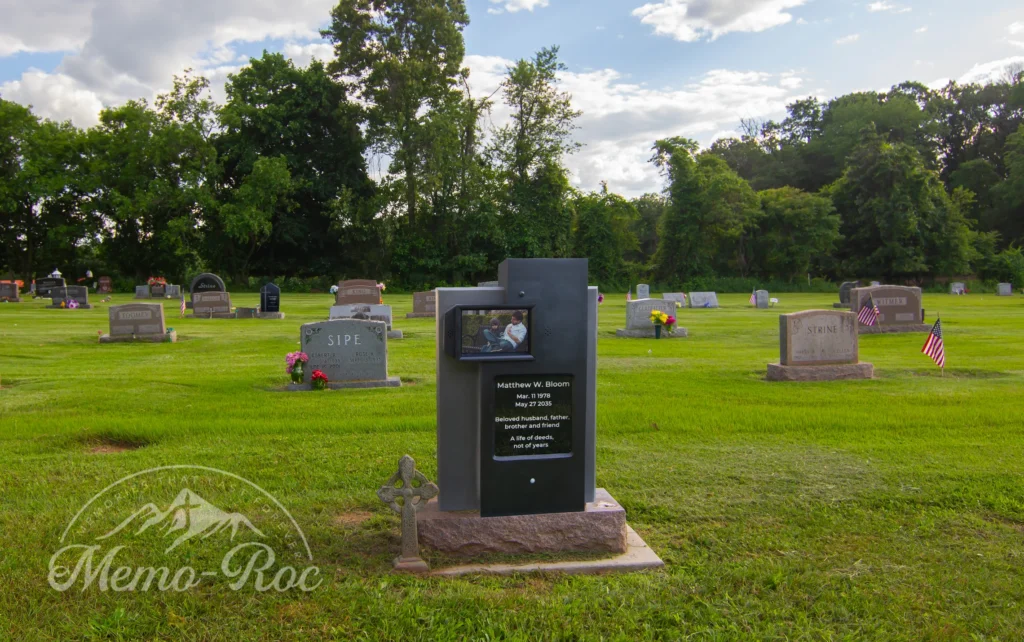
Impact & Structural Integrity
Natural stone has “fissures”—hidden cracks that occur during the mining process. You don’t know they’re there until the stone suddenly splits five years later. Ever-Roc is a controlled, engineered material. Every square inch has the same structural integrity, making it less likely to chip or shatter.
Foundation Stability
One of the biggest problems with granite is that it is so heavy that it eventually tilts or sinks into the ground. Ever-Roc provides the same visual “heft” and strength, but because it is a lighter composite, it puts less stress on the foundation. This means the monument stays level for the long haul.